
Explainer
-
Refugee, IDP, Evacuee — Words That Don’t Mean the Same Thing
"Refugee," "internally displaced person," "temporary protection," and "evacuee" are each terms defined by a different system, in a different way. Mixing them up describes a real person's status in a way that doesn't match the facts. This article works from the primary sources — the Refugee Convention, the UN's Guiding Principles, EU law, and Japan's Immigration Control Act — to set out what each term actually means, and a procedure writers can follow to check.
-
From ‘Shchedryk’ to ‘Carol of the Bells’: How One Melody Became Two Songs
The melody of the Christmas standard "Carol of the Bells" comes from the Ukrainian New Year's song "Shchedryk." It crossed to North America at a Carnegie Hall concert on October 5, 1922, and gained its English lyrics in 1936 — lyrics that are not a translation of the original. Drawing on primary sources, this article traces where one melody split into two songs.
-

Ukraine’s Christmas Moves from January 7 to December 25
Under a July 2023 law, Ukraine removed January 7 from its list of national holidays, leaving only December 25 as Christmas. That same September, two of the country's major churches also switched to a calendar that celebrates Christmas on December 25. This article separates the law, the church calendars, and family customs, and explains the twelve dishes of Christmas Eve and koliadky along the way.
-
What Did Yokohama-Odesa and Kyoto-Kyiv Actually Agree To As Sister Cities?
There is no legal definition of a "sister city." What agreement documents typically state is friendship and mutual understanding. What kind of documents formed the Yokohama-Odesa and Kyoto-Kyiv partnerships, who has carried them forward, and what has continued? A 2023 memorandum between Yokohama and Odesa was a more concrete document, spelling out both a purpose and a deadline.
-
What Kind of Country Is Ukraine? — Area, Population, Language, Daily Life
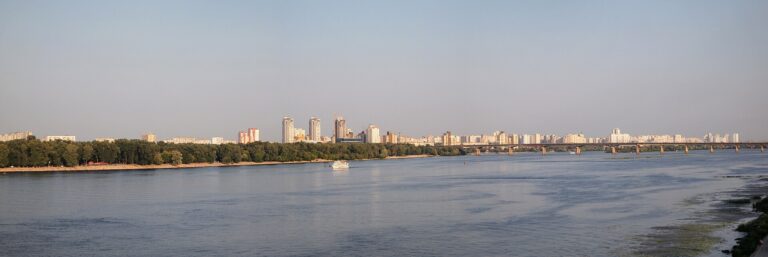
A basic overview of Ukraine's area, population, languages, and daily life. The last census was in 2001, so every population figure since then is an estimate. For each number, we note the date and scope it covers, moving through geography, language, and daily life in that order.
-

Ukraine’s Wartime Industries — The Weight of Agriculture, Manufacturing, Services, and Energy
This article shows the weight of Ukraine's industries in the order of agriculture, manufacturing, services, and energy. The sector-by-sector breakdown is only available through 2024. The scope covered by the statistics has changed partway through, some indicators have stopped being published, and others have switched to estimates. Drawing on data published by the State Statistics Service of Ukraine and the National Bank of Ukraine, we attach the scope, point in time, and basis to each figure.
-

Vyshyvanka ── Embroidery That Differs by Region, Including a Pattern That Arrived in the Late 19th Century
The vyshyvanka, Ukraine's embroidered shirt, varies in technique and color from region to region. Among the patterns now displayed as "traditional" is a cross-stitch design that arrived from soap wrappers in the late 19th century. How far can the meanings often attached to these patterns actually be backed up by sources? This article also looks at how the vyshyvanka is treated in Ukraine's national heritage list and in UNESCO's list.
-
Pysanka: The Ukrainian Wax-Written Egg, and Its 2024 UNESCO Listing
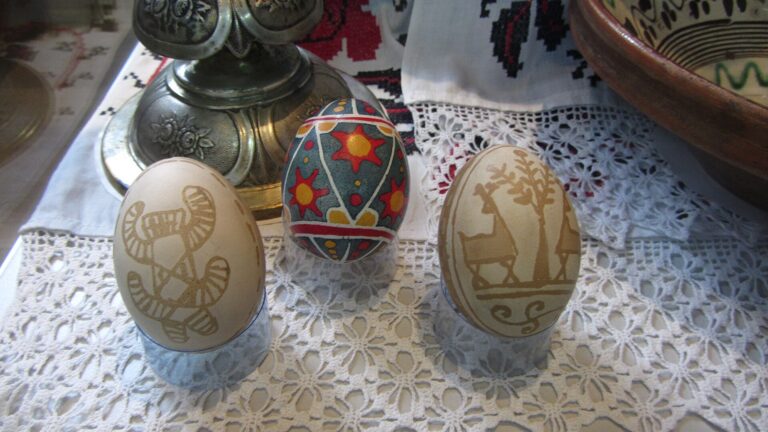
In December 2024, what was added to UNESCO's Representative List was "Pysanka, Ukrainian tradition and art of decorating eggs," a joint submission by Ukraine and Estonia. How do dictionaries and museums distinguish between these eggs? What warnings do Ukrainian researchers give about decoding "this pattern means this"? And the oldest surviving clues are not eggs at all, but 12th-century pottery.
-
The Day ‘Kiev’ Became ‘Kyiv,’ and How Ukraine’s Place Names Get Their Spelling
On March 31, 2022, Japan's Ministry of Foreign Affairs changed how it referred to Ukraine's capital, from 'Kiev' to 'Kyiv.' What changed was not the city's name, but how Київ is transliterated. This article looks in turn at the Ukrainian government resolution that sets the Latin-alphabet spelling, the #KyivNotKiev campaign, place-name changes made by law, and how older spellings are treated in historical sources.
-
How Ukrainian and Russian Differ
Ukrainian and Russian both use the Cyrillic alphabet, but Ukrainian has і, ї, є, and ґ, and lacks ы, э, ъ, and ё. Differences also show up in the sound of "г," in the words for "yes" and "no," and in borrowings from Polish. Together with the history of Ukrainian being dismissed as "just a dialect" under imperial Russia, this article explains how close, and how far apart, the two languages are.